5 min read
Asia Transparent Solar Cells Move Toward Smarter, Energy-Generating Buildings
m
marketfinder
September 14, 2026
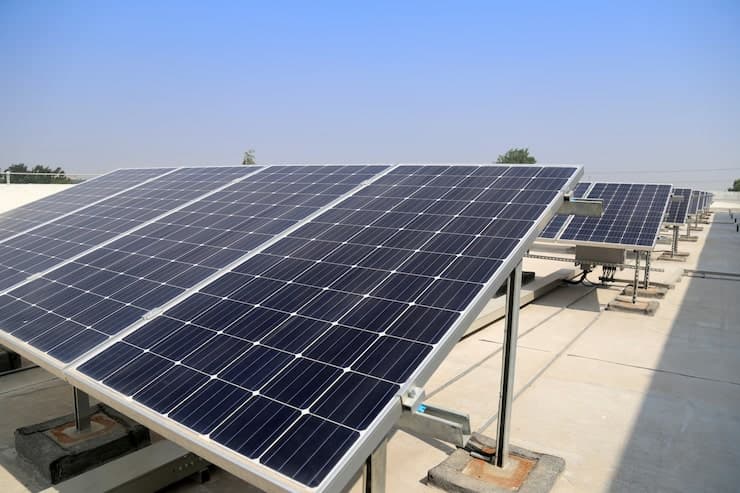
Asia’s solar industry is moving beyond conventional rooftop and ground-mounted installations as transparent photovoltaic technologies create opportunities to generate electricity through windows, façades, skylights, vehicle glazing, and other surfaces. Transparent solar cells allow buildings and products to combine daylight access with renewable electricity generation, making the technology increasingly relevant to dense urban environments where conventional installation space can be limited.
According to a Asia transparent solar cells industry report, the sector was valued at USD 21.21 million in 2025 and is projected to reach USD 29.81 million in 2026 and approximately USD 119.21 million by 2032. The study projects a CAGR of 25.99% during 2026–2032, with China expected to account for around 46% of regional revenue in 2026.
Urban Development Creates New Space for Solar Generation
Rapid urbanization across Asia is changing the way renewable energy can be incorporated into buildings. High-density cities often have limited land availability, while modern commercial structures increasingly feature extensive glazed surfaces. Transparent solar technologies can utilize these surfaces as energy-generating components without completely blocking natural light.
This application is particularly relevant to building-integrated photovoltaics (BIPV), where photovoltaic technology becomes part of the building envelope rather than being installed separately. Windows, façades, and skylights can therefore serve both architectural and energy functions.
The International Energy Agency has highlighted the continuing expansion of solar photovoltaic deployment and manufacturing, with Asia playing a central role in global solar supply chains. This broader expansion provides an ecosystem for emerging photovoltaic technologies, including transparent and semi-transparent solutions.
Perovskite Technology Gains Attention
Perovskite transparent solar cells are projected to hold approximately 32% of the regional market in 2026, making the technology a leading segment. Their growing relevance is associated with their potential for lightweight structures, adjustable transparency, and integration into applications where conventional opaque photovoltaic modules are less suitable.
Perovskite technologies can also be combined with other photovoltaic materials to develop tandem structures designed to improve energy conversion performance. Research and pilot-scale development are continuing as manufacturers and research institutions work to improve efficiency, durability, and commercial scalability.
However, transparent solar technologies still face an important balance between electricity generation and visibility. Higher transparency can reduce the amount of light absorbed for electricity production, while increasing energy conversion can affect the visual characteristics of the material. Addressing this trade-off remains an important area of technological development.
Commercial Buildings Represent a Major Application
Commercial buildings are expected to account for approximately 49% of the Asia transparent solar cells market in 2026. Office towers, hotels, shopping centers, corporate campuses, and institutional buildings often have large glass façades that can provide suitable surfaces for transparent photovoltaic integration.
The expansion of green buildings is strengthening this opportunity. China, Japan, South Korea, and India are investing in energy-efficient infrastructure while businesses and institutions increasingly consider building-level renewable generation as part of broader sustainability strategies.
The International Renewable Energy Agency continues to emphasize the importance of integrating renewable energy into wider energy-system transformation. For densely developed Asian cities, technologies capable of generating electricity from existing building surfaces could complement conventional solar installations.
China Maintains a Strong Regional Position
China is expected to capture approximately 46% of Asia’s transparent solar cells revenue in 2026. Its position reflects the country’s extensive photovoltaic manufacturing ecosystem, expanding renewable-energy deployment, and investment in next-generation solar technologies.
The National Energy Administration of China reported continued expansion of renewable-energy capacity, reinforcing the country's position within the global solar industry. Its established supply chain across photovoltaic materials, cells, modules, and related manufacturing provides a foundation for developing advanced solar applications.
Chinese companies and research organizations are also active in photovoltaic glass, perovskite technology, and building-integrated solutions. As commercial construction increasingly incorporates energy-efficiency requirements, transparent photovoltaic materials could gain additional relevance in façades and windows.
Efficiency and Durability Remain Key Challenges
Despite the potential, transparent solar cells are not yet free from technical limitations. The efficiency-transparency trade-off remains one of the principal challenges. In addition, certain emerging photovoltaic materials can face sensitivity to moisture and other environmental factors, raising concerns about long-term durability.
These challenges are encouraging research into advanced encapsulation, barrier films, tandem photovoltaic architectures, and improved material compositions. Better durability is particularly important for building applications because photovoltaic glazing may need to operate reliably for many years while remaining exposed to changing weather conditions.
The development of standardized manufacturing and installation practices will also influence commercial adoption. Transparent solar products must meet both photovoltaic performance requirements and architectural expectations related to appearance, structural integration, safety, and maintenance.
Applications Could Extend Beyond Buildings
Although BIPV represents an important application, transparent solar cells are being explored across several other areas. Automotive glazing, including sunroofs and vehicle windows, could provide additional surfaces for distributed energy generation. Consumer electronics, greenhouse glazing, signage, and smart-glass applications represent other potential areas.
Agricultural and greenhouse applications are particularly interesting because transparent photovoltaic materials could potentially combine controlled light transmission with electricity generation. However, the suitability of a particular technology depends on crop requirements, light transmission levels, energy output, and installation economics.
Transparent Solar Technology Moves Toward Commercialization
Asia’s transparent solar cells sector is developing alongside renewable-energy expansion, green construction, advanced materials research, and urban sustainability initiatives. Perovskite technology and commercial applications currently represent important areas of development, while China maintains a strong regional position supported by its photovoltaic manufacturing ecosystem.
The technology’s future progress will depend on improvements in efficiency, durability, transparency, manufacturing scale, and cost. As these factors evolve, transparent photovoltaics could become an additional component of energy-generating buildings and other surfaces where conventional solar panels cannot be easily deployed. The broader shift reflects a move toward integrating renewable-energy generation directly into the infrastructure of increasingly dense Asian cities.
m
Written by
marketfinder
Comments (0)
Sign in to join the conversation
Sign In